A Guide to Understanding Common Mode Chokes
In the modern world of electronics, the need for clean and reliable signal transmission is more critical than ever. With the proliferation of high-speed digital circuits, sensitive analog devices, and industrial equipment, electromagnetic interference (EMI) has become a pervasive challenge. One of the most effective solutions to mitigate EMI is the use of common mode chokes. Despite their widespread use, many engineers and hobbyists remain unclear about how they work, their types, applications, and selection criteria. This guide provides a comprehensive overview of common mode chokes to help you understand their role in electronic circuits.
What is a Common Mode Choke?
A common mode choke (CMC) is an electrical component designed to suppress unwanted common mode noise signals on power or signal lines while allowing differential signals to pass with minimal attenuation. Essentially, it is a type of inductor that filters interference affecting multiple lines simultaneously.
Unlike standard inductors, which resist changes in current on a single line, common mode chokes specifically target currents that are common to two or more conductors—meaning the same in-phase noise signal present on each conductor. By impeding these currents, CMCs prevent them from reaching sensitive parts of the circuit or propagating to external equipment.
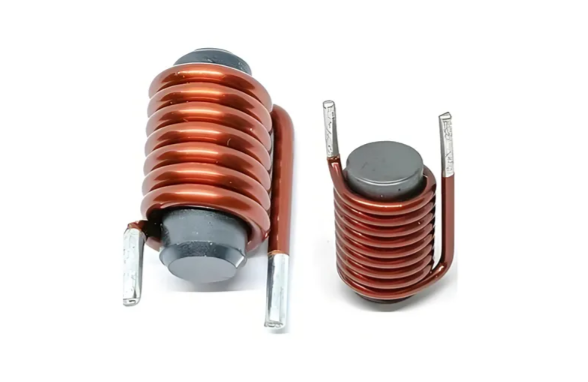
How Common Mode Chokes Work
A typical common mode choke consists of two or more coils wound on a shared magnetic core. The design leverages magnetic coupling:
Differential mode currents (the normal currents powering your device) flow in opposite directions through the coils. These opposing magnetic fields cancel each other out in the core, allowing differential signals to pass unimpeded.
Common mode currents (noise currents that are in phase on each line) generate a net magnetic field in the core, which produces inductive impedance that resists the flow of these unwanted signals.
This elegant mechanism ensures that the power or signal lines maintain their intended function while EMI is significantly reduced.
Key Applications of Common Mode Chokes
Common mode chokes are versatile and appear across various industries and electronic systems. Below are some primary applications:
1. Power Supplies
Power supply circuits are often sources of EMI due to high-frequency switching. CMCs are installed on input or output lines to suppress noise from switching regulators, ensuring compliance with EMC (Electromagnetic Compatibility) standards.
2. Data Communication Lines
High-speed data buses such as USB, Ethernet, HDMI, and CAN lines are susceptible to common mode noise. Using CMCs helps maintain data integrity, reduce errors, and prevent signal degradation in sensitive equipment.
3. Industrial Equipment
Industrial machinery often generates significant EMI, which can disrupt nearby sensitive devices. Common mode chokes are implemented in motor drives, inverters, and PLCs to mitigate these effects.
4. Automotive Electronics
Modern vehicles integrate numerous electronic systems—from infotainment to safety sensors. CMCs help filter noise in communication lines (CAN, LIN, FlexRay) and power lines, ensuring system reliability and regulatory compliance.
5. Renewable Energy Systems
Photovoltaic inverters and wind turbine systems produce common mode noise that can affect grid quality and connected equipment. Common mode chokes in these systems reduce harmonic emissions and meet IEC standards.
Types of Common Mode Chokes
Selecting the right CMC requires understanding the types available, each with unique characteristics:
1. Surface-Mount Common Mode Chokes
These are compact chokes designed for PCB mounting, ideal for modern electronics where space is limited. They are widely used in USB, HDMI, and power line applications. Advantages include low profile and compatibility with automated assembly.
2. Through-Hole Common Mode Chokes
Larger and more robust, these chokes handle higher currents and are often used in power electronics, industrial systems, and automotive applications. They provide higher inductance and superior heat dissipation.
3. Toroidal Core Common Mode Chokes
Toroidal CMCs feature a circular core, providing high inductance with minimal leakage flux. They are highly efficient, suitable for high-frequency suppression, and commonly found in switch-mode power supplies and audio equipment.
4. Rod or Drum Core Common Mode Chokes
These traditional designs are easy to manufacture and integrate into circuits requiring moderate EMI suppression. They are cost-effective but occupy more PCB space compared to toroidal types.
Suggested reading:


评论
发表评论